


In modern aerospace engineering, system modeling plays a critical role in bridging the gap between conceptual design and real-world performance. By simulating aircraft behavior, engineers can anticipate challenges, optimize designs, and ensure safety. Aerospace software is at the heart of this process, enabling precise simulations, data analysis, and flight-critical software development that guides aircraft from concept to deployment. Companies like Flight Level Engineering specialize in providing comprehensive modeling, testing, and integration solutions that streamline the aerospace development lifecycle.
Understanding System Modeling in Aerospace
System modeling involves creating digital representations of aircraft components, software, and flight dynamics. These models allow engineers to test performance under various conditions without risking hardware or human safety. In aerospace, system modeling is not limited to individual components; it encompasses full-system interactions, including aerodynamics, avionics, propulsion, and control systems. The goal is to simulate realistic flight scenarios to validate designs and refine operational procedures.
For example, simulating the flight behavior of a supersonic drone helps engineers assess stability, control, and response to environmental factors before actual flight testing. This predictive approach reduces errors, development costs, and time-to-market for aerospace projects.
The Role of Flight-Critical Software
A crucial aspect of system modeling is developing robust, flight-critical software. This software ensures that aircraft systems perform reliably under extreme conditions, from subsonic commuter planes to hypersonic experimental vehicles. Engineers employ specialized programming languages like C++, Python, and Matlab/Simulink to create embedded software that can manage flight controls, navigation systems, and safety-critical functions.
Flight Level Engineering emphasizes integrating these software solutions with hardware systems to deliver seamless performance. By testing software in a simulated environment, potential failures can be identified and corrected before deployment, enhancing both safety and efficiency.
Advanced Simulation Techniques
Simulations are a cornerstone of system modeling in aerospace. They provide a risk-free environment for testing and validation. Flight-Level Engineering offers diverse simulation services, including:
- Software-in-the-loop (SIL) testing: Models software interactions with virtual systems, ensuring proper response without physical hardware.
- Hardware-in-the-loop (HIL) testing: Combines real hardware with simulated systems to evaluate actual system behavior.
- In-flight simulation: Integrates simulations during actual flight to validate system performance under real-world conditions.
These simulations help identify potential issues early, reduce operational risks, and optimize designs efficiently.
Data Acquisition and Analysis
Accurate system modeling depends on precise data collection. Advanced data acquisition systems capture real-time sensor inputs, telemetry, and instrumentation readings. Engineers then analyze this data to identify trends, detect anomalies, and refine models for greater accuracy.
For instance, analyzing flight telemetry from a variable stability aircraft can reveal how control surfaces respond under different conditions, allowing engineers to fine-tune software and mechanical systems for optimal performance.
Flight Simulator Setup for Training and Testing
A key application of system modeling is creating realistic training and testing environments through a flight simulator setup. These simulators replicate actual aircraft behavior and provide hands-on experience for pilots and engineers. They range from laptop-based simulators to full-motion, high-fidelity systems. By simulating emergency scenarios, variable weather, and unusual flight conditions, teams can practice responses safely and cost-effectively.
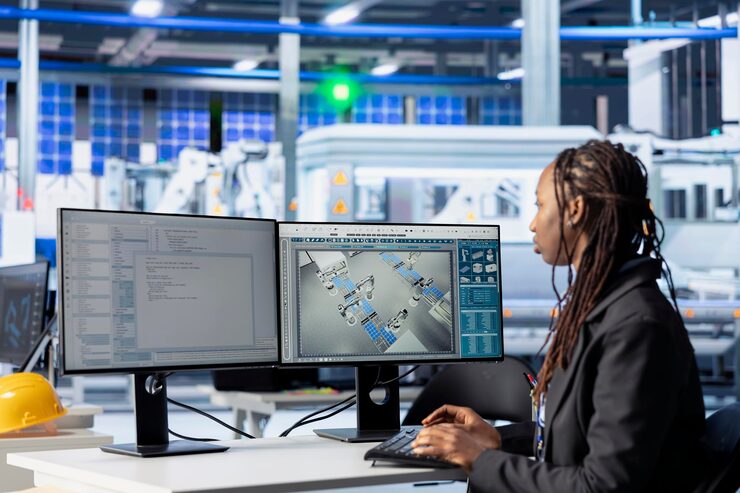
Flight simulators also support software and hardware testing, allowing teams to integrate new avionics or control systems without risk. This iterative testing process ensures that all components work harmoniously before live flights.
System Integration and Flight Testing
System modeling extends to integrating complex subsystems. Engineers combine software, avionics, and mechanical components to ensure cohesive operation. Effective integration reduces errors and ensures smooth performance across all flight stages.
Once systems are integrated, rigorous flight testing validates the models. This process involves controlled flights, telemetry analysis, and post-flight evaluations. By comparing simulated results with actual performance, engineers can refine models and optimize safety.
Tailored Aerospace Solutions
Every aerospace project is unique, and system modeling must be customized accordingly. Flight Level Engineering provides tailored solutions for startups and established aerospace leaders. Their services include flight-critical software, integrated flight controls, simulation, instrumentation, and comprehensive testing support. By leveraging expertise across multiple disciplines, they deliver efficient, cost-effective solutions that meet stringent aerospace standards.
Benefits of System Modeling in Aerospace
Implementing system modeling in aerospace projects offers numerous advantages:
- Risk mitigation: Identify potential failures before they occur in real flights.
- Cost reduction: Minimize physical testing requirements and expensive redesigns.
- Efficiency: Accelerate development timelines with accurate predictive models.
- Training enhancement: Improve pilot readiness and decision-making through realistic simulation.
- Data-driven decisions: Use precise analytics to optimize aircraft performance.
Conclusion
System modeling is transforming aerospace engineering, making aircraft safer, more efficient, and easier to develop. By combining advanced simulation, flight-critical software, and rigorous testing, engineers can anticipate challenges and deliver innovative solutions. Flight Level Engineering exemplifies this approach, offering expertise in software, hardware integration, and flight simulator setup to ensure projects succeed from concept to reality. For aerospace teams aiming for precision and performance, leveraging system modeling is an essential step toward achieving excellence in flight-level engineering.