


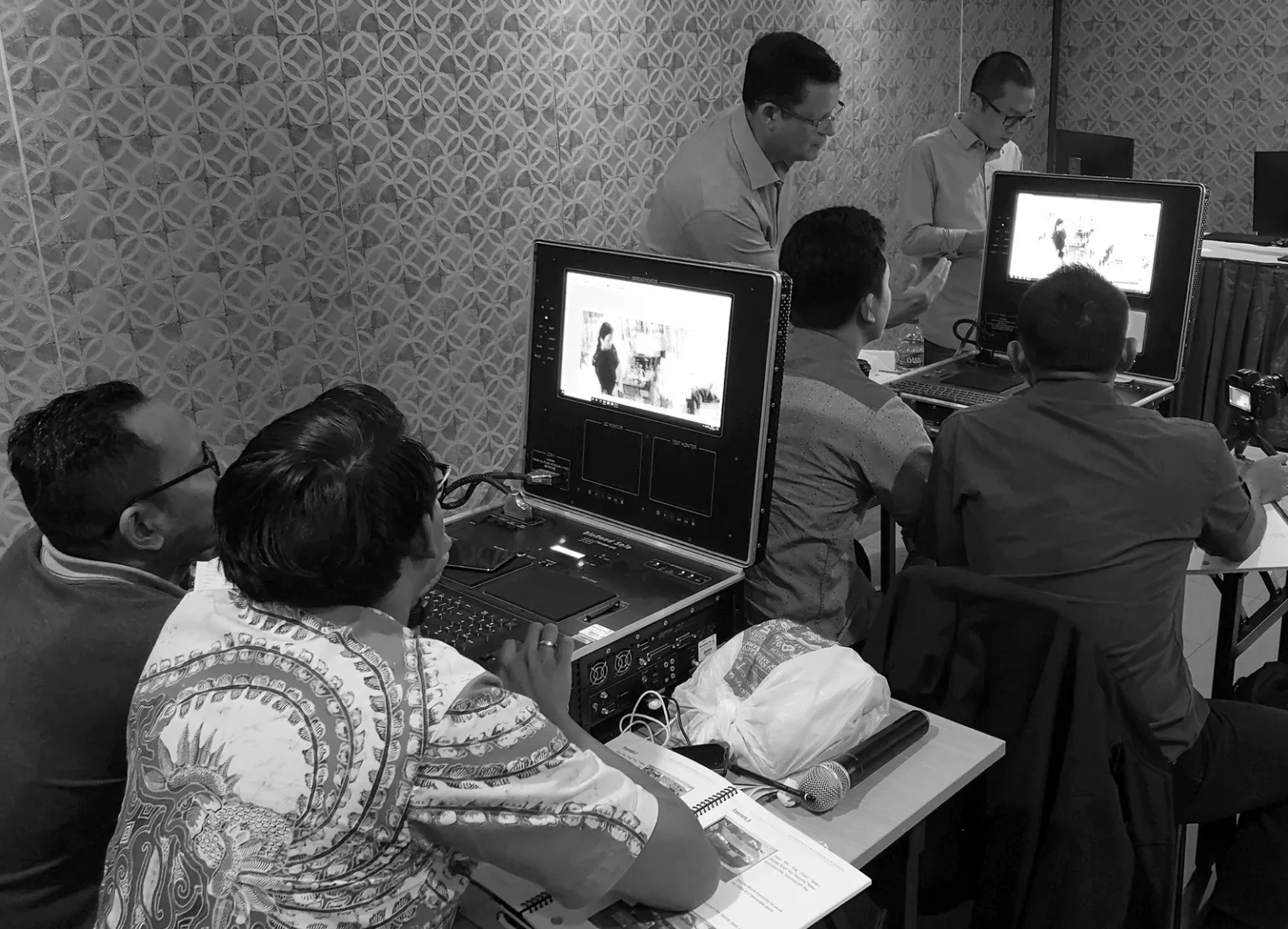
Footage only becomes intelligence when someone can use it. Until then, it is a recorder sitting at a scene, a drive in a bag or a file nobody can open.
The gap between capturing evidence and acting on it is where investigations lose time. This article walks through the four links that turn raw CCTV into usable intelligence gathering, where each one tends to break, and what to look for in a data acquisition system built to close the gap.
Why intelligence gathering depends on the quality of the evidence chain
Decision-makers in a major incident need three things from footage: that it is complete, that it is trustworthy and that it arrives while it can still shape the response. A strong result in one area cannot make up for failure in another. A sharp image that arrives a day late helps less than a usable one that arrives within hours. Beautifully preserved evidence that nobody can read helps no one.
Think of it as a chain with four links: retrieve, preserve, enhance and share.
Link one: retrieve from whatever the scene gives you
Scenes do not offer tidy, matching equipment. You might face a modern digital recorder next to an older analogue system, plus stray drives and other multimedia sources.
The first test of any system is range. Daetech states that the MIDAS-DCL allows on-scene recovery from analogue and digital CCTV and multimedia sources, using multiple connection options. Wherever your agency operates, ask whether a system covers the recorders you are likely to meet rather than the ones in a demonstration.
Link two: preserve without altering the original
Evidence that has been changed loses value, however useful it looks. That is why write protection sits at the centre of sound forensic handling.
According to Daetech, the MIDAS-DCL includes an integrated, write-protected hard drive forensic cloning circuit. Because it is built into the unit, cloning forms part of the same workflow rather than a separate tool with its own procedure to learn.
Procedure matters here as much as hardware. Daetech says its integrated software follows a structured Standard Operating Procedure (SOP), guiding officers through a set workflow with visual verification at each step. The unit also comes pre-loaded with Daetech’s Evidence Management Suite (EMS). A fixed workflow helps officers of different experience levels handle evidence the same way under pressure.
Link three: enhance until the footage is usable
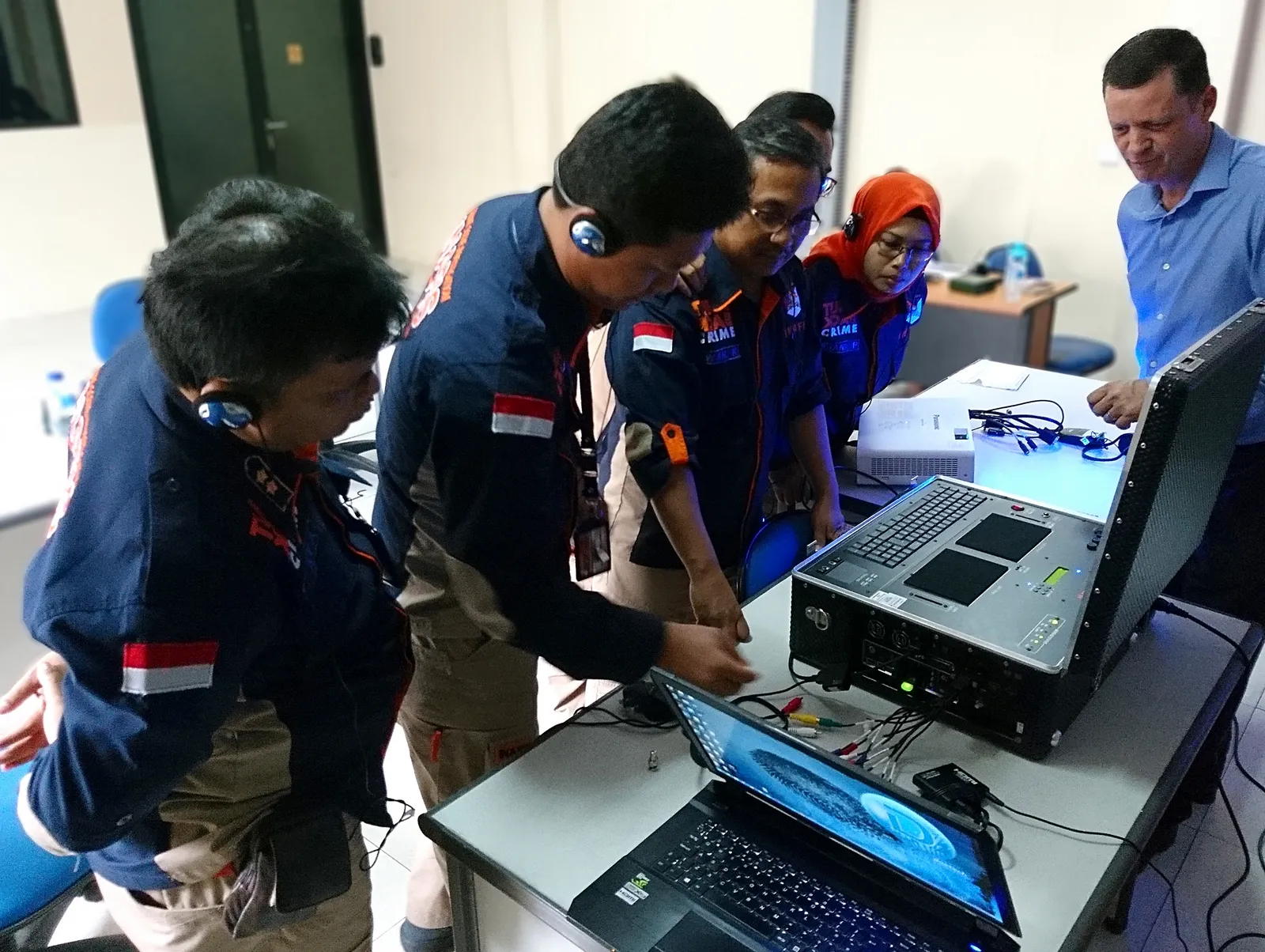
CCTV is rarely cinematic. Footage can be low resolution, noisy, poorly lit or compressed. Enhancement is what turns a frame that cannot be read into one that can.
The MIDAS DCL and DCL SOLO ship with Cognitech Tri-Suite. Daetech describes Cognitech as the world’s first and oldest forensic video company, with more than 30 years of scientific research in image and video processing. Treat that as the vendor’s claim, and ask for reference material if enhancement quality is central to your purchase.
The practical advantage is integration. When enhancement tools sit inside the same system that retrieves the footage, there is no export-and-reimport step between the scene and the analysis.
Link four: share fast with the right agencies
Intelligence has no value locked in a vehicle. The final link is getting evidence to the people who can act on it.
Daetech lists 4G, WiFi and Bluetooth communications for the MIDAS-DCL, and says they allow immediate dissemination of crucial evidence to relevant agencies. An integrated battery system supports off-grid working, so sharing is not limited to places with a convenient power supply.
Where delays usually creep in
In most workflows, the delays sit between the links rather than inside them.
- Travel: moving evidence to a laboratory before retrieval can even start.
- Handoffs: passing material between tools that were never designed to work together.
- Uncertainty: operators unsure of the next step, so they pause or work to different standards.
- Distribution: waiting to return to a connected location before sending anything on.
Daetech positions the MIDAS range as a way to remove the first of these by bringing retrieval and forensic analysis tools directly to the crime scene, eliminating the travel between laboratory and location. The integrated design addresses the others by keeping retrieval, procedure, enhancement and communications in one unit.
Who uses this kind of system
Daetech says the MIDAS range is used by law enforcement, intelligence agencies, military, counter-terror units, scenes of crime teams and forensic institutions all over the world. The needs differ in detail, but the chain is the same: retrieve, preserve, enhance, share.
The takeaway
Intelligence gathering from CCTV is only as fast as its slowest link. A data acquisition system that handles all four steps at the scene removes the handoffs where time and procedural discipline are usually lost.
If you are weighing options, the MIDAS-DCL-SOLO is one example of an integrated, field-ready approach. Daetech invites requests for information or a quotation through its MIDAS page.
FAQ
What does intelligence gathering from CCTV involve? It means retrieving footage from recorders and other sources, preserving it without alteration, enhancing it so it is usable, and passing it to the agencies that need it.
Why retrieve CCTV evidence at the scene rather than in a lab? It removes the travel time between the scene and the laboratory, so investigators can review evidence sooner during time-critical cases.
Does footage need enhancing before it is useful? Often, yes. Poor resolution, noise and lighting can hide detail. Integrated tools, such as Cognitech Tri-Suite in the MIDAS DCL and DCL SOLO, are designed to address this.
Can evidence be shared directly from the field? Daetech states that the MIDAS-DCL includes 4G, WiFi and Bluetooth communications for immediate dissemination to relevant agencies. Confirm current specifications with the vendor.
What should I check first when comparing systems? Start with source coverage and write-protected cloning, then look at the guided workflow, enhancement tools and portability.


