


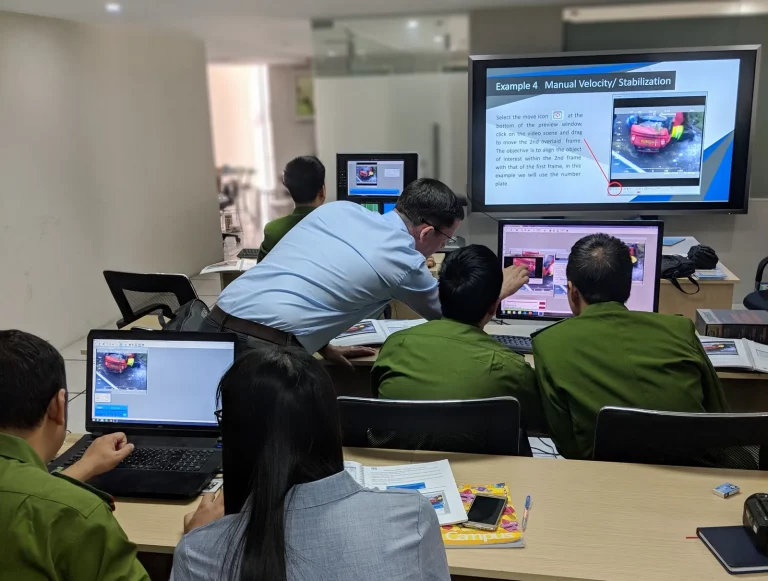
In the world of forensic investigation, every second counts. The ability to collect, process and analyse evidence efficiently and accurately can be the difference between solving a case and letting it fall through the cracks. This is where crime scene forensics meets the power of cloud technology solutions—a convergence that’s reshaping how law-enforcement and forensic professionals operate. In this article we’ll explore how cloud-based tools are transforming forensic workflows, review key benefits and challenges, and illustrate how firms like Daetech Systems (UK) Ltd (alongside its partner Cognitech Inc.) are already integrating these innovations in the field.
Understanding the Landscape: Crime Scene Forensics Today
Forensic investigators at a crime scene must rapidly collect, preserve and interpret physical and digital evidence. That includes photographs, video, digital multimedia evidence (DME), 3D scans, image authentication, and more. According to Daetech Systems, they provide bespoke hardware and software solutions designed precisely for evidence retrieval, review and forensic analysis.
Traditionally, many forensic workflows have been isolated: data captured on-site, transferred via physical media or secure local networks, analysed using desktop workstations, and then results shared via reports. This linear chain has some limitations: delays in transfer, bottlenecks in collaboration, storage constraints, and sometimes security vulnerabilities.
Enter cloud technology solutions—offering a paradigm shift.
What Are Cloud Technology Solutions in Forensics?
When we say “cloud technology solutions” in the context of forensic work, we are referring to platforms and services that:
- Enable storage of large volumes of evidence (video, image, sensor data) off-site in secure data centres
- Allow remote access to data and analysis tools via web browsers or thin clients
- Provide scalable compute and analytics capabilities (e.g., processing large video files, applying image-enhancement algorithms)
- Offer collaboration features so multiple investigators (geographically dispersed) can work on the same case simultaneously
- Ensure high availability, backup, audit trails and compliance with chain-of-custody standards
In short: they extend the forensic toolkit beyond a single workstation at a lab, into a dynamic, accessible-from-anywhere environment.
Why Cloud Technology Solutions Are a Game-Changer for Crime Scene Forensics
1. Speed and Efficiency
When evidence feeds (e.g., from CCTV, drones, body-cams) are uploaded to the cloud instantly, the delay between collection and analysis is much shorter. Investigators no longer wait for physical media to be transported or queued at a lab. With cloud-enabled workflows, tools like those offered by Daetech Systems (e.g., their MIDAS and DARS engines) become accessible remotely, enabling faster turnaround.
2. Collaborative Workflows
Modern crimes often cross jurisdictions, require specialised skills (video enhancement, image authentication, 3D reconstruction) and involve large teams. Cloud platforms let forensic analysts, law-enforcement agents, legal teams and intelligence partners collaborate in real time from different locations. This improves decision-making and ensures all stakeholders are working off the same version of the evidence.
3. Scalability & Flexibility
Forensic evidence, particularly video, can consume massive storage and processing resources. Cloud infrastructure scales on demand—so when a large dataset arrives (for example, from a major incident or public event), the system can expand capacity dynamically. This avoids the need for upfront investment in hardware that may sit idle most of the time.
4. Advanced Analytics & Tools
Cloud-based forensic platforms can integrate advanced analytics: artificial intelligence for pattern detection, image enhancement filters, facial recognition, 3D photogrammetry. For example, Daetech points to their “crime scene photogrammetry” capabilities—unique to their partner Cognitech—enabling forensic measurement and reconstruction of scenes. When hosted in the cloud, these compute‐intensive operations become accessible even to smaller agencies that lack large on-premises compute farms.
5. Reduced Physical Constraints & Mobility
Investigators no longer need to bring bulky media back to a base location. With secure cloud access, evidence can be uploaded from the field (e.g., body-cams, drones, mobile devices), and processed remotely. This gives forensic teams flexibility to respond immediately, often while still at the scene.
6. Chain of Custody and Security
A well-configured cloud solution can enforce strong audit logs, versioning, access controls and encryption. That bolsters the forensic chain of custody, ensures tamper evidence, and supports admissibility in court. Given the high stakes of forensic work (especially in criminal trials, counter-terrorism, intelligence), these capabilities are paramount. Daetech emphasises their support and training, as well as 24/7 service, to ensure operational readiness.
Key Use Cases – How Cloud Technology Solutions Support Forensic Investigations
Here are some concrete ways cloud technology is applied in crime scene forensics:
Use Case: Video Evidence Analysis
At a major incident, large volumes of CCTV and body-cam footage need processing to locate suspects, extract frames, enhance images. A cloud platform allows ingest of this video, uses remote compute to run enhancement and de-blurring functions, and enables multiple analysts to tag, annotate and review concurrently.
Use Case: Image Authentication & Tampering Detection
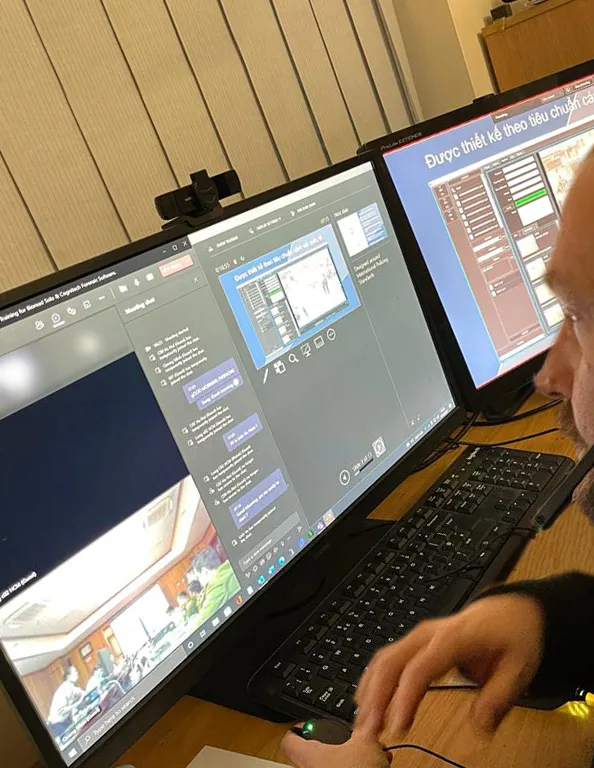
Digital images may be submitted as evidence and need authentication (to check tampering). As seen in the Daetech offering, their “Image Authentication” tools (via Cognitech) handle these tasks. When deployed via cloud, expert analysts can access the tools from any approved workstation, speeding up verification across geographies.
Use Case: 3D Photogrammetry and Crime Scene Reconstruction
Mapping a crime scene in three dimensions, integrating drone scans, still photographs, video, to reconstruct trajectories, positions, object placements. The specialized algorithms that handle this require significant compute; cloud infrastructure supports this and lets results be shared across the investigative team.
Use Case: Remote Incident & Mobile Deployment
In hostile or remote environments (for example military, counter-terrorism, disaster sites), cloud-enabled forensic solutions allow field units to upload data, coordinate with central labs, and get real-time analytics—even when on-site infrastructure is limited. This aligns with Daetech’s promise of bespoke, off-grid computing solutions.
Implementation Considerations & Best Practices
While cloud technology solutions offer significant benefits for crime scene forensics, successful adoption requires thoughtful planning. Here are key considerations:
Data Security & Compliance
Sensitive forensic data must be protected. Choose a cloud environment with strong encryption (in transit and at rest), strict access controls, audit logs and compliance with local legal/regulatory frameworks (for example evidentiary chain-of-custody, privacy laws). Partnering with experienced forensic solution providers (like Daetech) helps ensure adherence to these rigorous standards.
Bandwidth & Connectivity
Uploading large video/image files from remote or constrained sites can be challenging. Ensure the network infrastructure supports timely transmission, or use hybrid models where onsite preprocessing is done, then synced to cloud when connectivity is available.
Workflow Integration
Adopting cloud solutions should align with existing forensic workflows—capture, ingestion, processing, analysis, archiving. Integration with local tools, chain of custody systems, case-management platforms is vital to avoid disruptions. Custom training (as offered by Daetech) ensures the team can use the tools effectively.
Scalability & Cost Control
While cloud offers elastic scaling, cost control is essential—especially for organisations that may handle large peaks of data but operate on limited budgets. Establish clear policies for storage lifecycle (archive vs active), compute usage, and user access levels.
Training & Expertise
Sophisticated forensic analysis (video enhancement, photogrammetry, image authentication) requires specialist skills. Ensure your team is trained, or partner with providers who deliver both the software/hardware and training support. Daetech emphasises this in their offering.
Chain of Custody & Audit Trails
Maintaining a robust chain of custody is non-negotiable in forensic work. Cloud platforms must provide date-time stamps, version history, user access logs, tamper-proof storage and clear audit trails to maintain evidentiary integrity.
Future Trends: What’s Next for Cloud in Forensic Science
Looking ahead, cloud technology solutions are likely to bring further innovation to crime scene forensics:
- AI‐Powered Investigation Tools: Machine-learning models in the cloud will assist with suspect identification, pattern recognition (e.g., gait, face, object), anomaly detection in large datasets.
- Edge-to-Cloud Integration: Field devices (drones, body-cams, mobile units) will perform preliminary analysis on-device, then sync to cloud for deeper processing and collaboration.
- Global Forensic Collaboration Networks: Cloud platforms will connect agencies across continents, enabling cross-jurisdictional evidence sharing and coordinated investigations.
- Immersive 3D/VR Crime Scene Reconstruction: Using cloud platforms to generate detailed 3D reconstructions and virtual walkthroughs of crime scenes—useful for investigator training, court presentations, and remote analysis.
- Automated Workflow Orchestration: Cloud pipelines will automatically ingest, tag, process, and archive evidence, reducing manual effort and enabling faster investigative cycles.
Summary
In summary, the integration of cloud technology solutions into crime scene forensics marks a major shift in how evidence is processed, analysed and shared. From increased speed and collaboration, to scalable compute and enhanced analytics, these solutions empower forensic professionals to do more—faster, more accurately, and with greater flexibility. Organisations like Daetech Systems are at the forefront of this transformation, offering bespoke solutions, training and support to forensic agencies worldwide.


